Heat Pump Installation & Natural Gas Heating Systems
Modern homeowners in Louisiana and the Gulf South region need heating systems that provide reliable comfort, strong energy efficiency, and long-term value. Heat pump systems and natural gas heating systems are two of the most effective options for homes that need dependable heating during seasonal temperature changes.
When properly designed and installed, these HVAC systems can improve indoor comfort, reduce energy consumption, and help lower monthly utility costs. The best HVAC system installation option depends on the home’s heating needs, existing HVAC setup, energy goals, and whether a heat pump, gas furnace, or hybrid heating system is the right fit.
Heat Pump & Natural Gas Heating: Key Takeaways
For homeowners comparing heat pump installation, natural gas heating systems, and hybrid HVAC solutions, the most important things to keep in mind are:
• Heat pumps provide both heating and cooling in one system, making them a strong option for Gulf South homes with mild to moderate winters.
• Natural gas heating systems offer powerful, reliable heat during colder weather and remain a dependable choice for homes with existing gas service.
• Hybrid heating systems combine a heat pump with a natural gas furnace, allowing the system to automatically use the most efficient heating source based on outdoor temperatures.
• Proper HVAC design, system sizing, ductwork evaluation, and professional installation are essential for long-term comfort, efficiency, and equipment performance.
• Modern heating upgrades can help reduce energy use, improve indoor comfort, lower monthly utility costs, and extend the life of the overall HVAC system.
• Our local HVAC contractors install heat pumps, gas furnaces, and dual-fuel hybrid heating systems for homeowners throughout Louisiana and the Gulf South region.
Heat pumps are especially valuable in the Gulf South because they provide both heating and cooling in one efficient system. Instead of generating heat through combustion, a heat pump transfers heat, which can help reduce overall energy use in mild to moderate winter conditions.
Natural gas heating systems remain a powerful and reliable option for colder weather, especially for homes with existing gas service. For many homeowners, a hybrid heating system offers the best of both technologies by using the heat pump during moderate temperatures and switching to gas heating when stronger heat output is needed.
Professional HVAC services for Heat Pumps & Natural Gas Heating
Comfort Engineered Systems Inc. provides professional heat pump installation, heat pump replacement, hybrid heating systems, and natural gas heating systems designed to deliver reliable performance and long-term efficiency. By combining engineering-driven HVAC design with high-quality equipment, we help homeowners upgrade to modern heating systems that improve comfort, reduce energy costs, and increase overall HVAC system performance.
Whether a home requires a high-efficiency heat pump system, a gas furnace upgrade, or a dual-fuel hybrid heating system, Comfort Engineered Systems Inc. focuses on designing solutions that match the home’s specific heating requirements.
Why Modern Homes in Louisiana & the Gulf Are Switching to Heat Pump Systems
Heat pump systems have rapidly become one of the most popular heating solutions in residential HVAC. Unlike traditional furnaces that generate heat through combustion, a heat pump moves heat from one place to another using advanced refrigeration technology.
During colder months, a heat pump extracts heat from outdoor air and transfers it into the home. In warmer months, the system reverses the process, removing heat from the home to provide cooling. Because heat pumps transfer heat rather than generate it, they can operate with significantly higher energy efficiency than many traditional heating systems.
This design offers several major advantages for homeowners.
Energy Efficient Heating Systems Lower Home Heating Costs
Heat pumps can deliver multiple units of heat energy for every unit of electricity used. This makes them one of the most efficient heating technologies available today. By reducing reliance on fossil fuel combustion, heat pumps often reduce overall household energy usage, lowering energy bills.
Year-Round Comfort for Gulf Coast Homes
A single heat pump system can provide both heating and cooling, eliminating the need for separate HVAC equipment.
Improved Temperature Control
Modern heat pumps use variable-speed compressors and advanced controls that maintain more consistent indoor temperatures.
More Environmentally Friendly Heating Operation
Heat pump systems can significantly reduce greenhouse gas emissions compared to older heating systems.
In many climates, heat pumps perform exceptionally well because winter temperatures rarely fall below the point where the system operates efficiently. For Gulf South homeowners looking for energy-efficient heating systems, a properly installed heat pump is often one of the most effective upgrades available.
Heat Pump Installation Services in Louisiana & the Gulf South
Installing a heat pump system requires more than simply replacing existing equipment. Proper installation involves system engineering, load calculations, and careful HVAC design to ensure the system operates efficiently and reliably.
Comfort Engineered Systems Inc. approaches heat pump installation as a full engineering process, ensuring every component of the HVAC system works together to deliver optimal performance.
Types of Heat Pump Systems To Consider
There are several types of heat pump systems available today, each designed to meet different heating and cooling needs.
Air-Source Heat Pumps
Air-source heat pumps are the most common residential systems. They transfer heat between the home and outdoor air and can provide both heating and cooling throughout the year. Modern air-source systems have improved significantly in recent years, allowing them to operate efficiently even in colder conditions.
High-Efficiency Variable-Speed Systems
Variable-speed heat pumps use advanced compressor technology that adjusts system output based on the home’s heating demand. Instead of turning on and off repeatedly, these systems run at lower speeds for longer periods, maintaining steady temperatures while reducing energy consumption.
Cold Climate Heat Pumps
Cold climate heat pumps are specifically engineered to maintain efficiency in lower temperatures. These systems use enhanced compressors and advanced refrigerants that allow them to continue extracting heat from outdoor air even when temperatures drop significantly.
Dual Fuel / Hybrid Heat Pump Systems
Hybrid systems combine a heat pump with a natural gas furnace. The heat pump operates during moderate temperatures, while the furnace automatically activates during colder weather when gas heating becomes more efficient.
Performance Benefits of Heat Pump Systems
Homeowners upgrading to modern heat pumps often notice significant improvements in both comfort and energy efficiency.
Key benefits of a heat pump installation include:
- Efficient heating and cooling in one integrated system
- Consistent indoor temperatures with fewer hot or cold spots
- Quiet operation compared to older HVAC systems
- Reduced energy bills through improved efficiency
- Environmentally responsible operation
When installed correctly, heat pumps provide a balanced combination of comfort, efficiency, and long-term reliability.
Engineering & HVAC System Design
One of the most important factors in heat pump performance is proper HVAC system design. Oversized or undersized equipment can lead to reduced efficiency, increased wear, and inconsistent indoor temperatures.
Comfort Engineered Systems Inc. focuses on engineering-driven heat pump and natural gas heating system installation practices that include:
- Home load calculations to determine proper system capacity
- Evaluation of ductwork performance and airflow
- Electrical system compatibility
- System configuration for optimal efficiency
- Integration with smart thermostats and zoning systems
This engineering approach ensures that the installed heat pump system operates at its full potential with minimal HVAC maintenance or repairs, while providing reliable performance for years to come.
Hybrid Heating Systems (Heat Pump + Natural Gas)
One of the most advanced heating solutions available today is the hybrid HVAC system, also known as a dual-fuel heating system.
A hybrid system combines the efficiency of a heat pump with the powerful heating capability of a natural gas furnace. This configuration allows the system to automatically choose the most efficient heating method based on outdoor temperature conditions.
How Hybrid Heating Systems Work
During mild to moderate temperatures, the heat pump operates as the primary heating system. Because heat pumps are highly efficient in these conditions, they can provide heating at a lower operating cost.
When temperatures drop below a certain threshold, the system automatically switches to the natural gas furnace. Gas heating provides stronger heating output during colder weather, ensuring reliable indoor comfort through geothermal HVAC systems.
Key Benefits of Hybrid Heating Systems
Hybrid systems offer several advantages to homeowners. Some of the advantages to installing a Hybrid heating system in your Gulf South home include:
- Maximum energy efficiency across varying temperatures
- Lower overall heating costs
- Reliable heating during cold weather
- Automatic system optimization through intelligent controls
For homeowners seeking the best balance between efficiency and heating power, hybrid systems are often one of the most effective home heating solutions available.
Natural Gas Heating Systems
Natural gas furnaces remain one of the most reliable and widely used heating systems in residential HVAC. Modern gas furnaces offer significant efficiency improvements compared to older systems, with many units achieving efficiency ratings exceeding 95 percent.
Gas Furnace Technology
Natural gas furnaces generate heat through controlled combustion. The heat produced is transferred to the home’s air through a heat exchanger and distributed through the duct system.
Modern furnaces include advanced features such as:
- High-efficiency heat exchangers
- Variable-speed blower motors
- Sealed combustion chambers
- Smart thermostat compatibility
AFUE Efficiency Ratings
Gas furnace efficiency is measured using the Annual Fuel Utilization Efficiency (AFUE) rating. This rating indicates how effectively the furnace converts fuel into usable heat.
Higher AFUE ratings mean greater efficiency and lower energy waste.
When Homeowners Choose Gas Heating
In some cases, homeowners may choose a gas furnace instead of a heat pump. This may occur when:
• Extremely cold winter conditions are common
• Natural gas is readily available and affordable
• The home already has an existing gas heating system
Comfort Engineered Systems Inc. helps homeowners evaluate their options and choose between gas furnaces, heat pumps, or hybrid systems based on the home’s heating needs and efficiency goals.
Energy Efficiency & Modern HVAC Technology
Modern HVAC systems use advanced technology designed to reduce energy consumption while improving indoor comfort.
Key efficiency metrics include:
SEER / SEER2 Ratings
SEER (Seasonal Energy Efficiency Ratio) measures cooling efficiency for air conditioning and heat pump systems. Higher ratings indicate better efficiency.
HSPF Ratings
HSPF (Heating Seasonal Performance Factor) measures heat pump heating efficiency over an entire heating season.
AFUE Ratings
AFUE ratings measure furnace efficiency and fuel utilization.
Variable-Speed Compressors
Variable-speed technology allows HVAC systems to adjust output based on heating demand. This improves comfort while reducing energy consumption.
Smart Thermostats
Smart thermostats allow homeowners to control HVAC systems remotely while optimizing heating schedules to reduce energy use.
Zoned HVAC Systems
Zoning systems allow different areas of the home to be heated or cooled independently, improving comfort while reducing energy waste.
Together, these technologies help homeowners achieve lower utility bills, improved comfort, and longer HVAC system lifespan.
How Much Does it Cost to Install a Heat Pump?
The cost of installing a new heat pump system can vary depending on several factors, including system size, efficiency level, and installation complexity.
Several factors influence final heat pump installation costs:
• System capacity requirements
• Efficiency ratings and equipment type
• Ductwork modifications or upgrades
• Electrical system upgrades
• Smart thermostat installation
• Installation complexity
Although initial installation costs vary, homeowners often recover a portion of their investment through lower monthly energy bills and improved HVAC efficiency. Comfort Engineered Systems Inc. also offers financing options for heat pump installation.
Professional Heat Pump Installation Process
A properly installed heating system begins with careful planning and professional execution. Comfort Engineered Systems Inc. follows a structured installation process designed to ensure reliable HVAC performance.
HVAC Home Consultation
The process begins with a consultation to evaluate the home’s heating needs, current HVAC system performance, and homeowner comfort goals.
Load Calculations & HVAC System Sizing
Technicians perform detailed calculations to determine the proper heating capacity required for the home.
HVAC System Recommendations for Gulf Coast Homes
Based on the evaluation, Comfort Engineered Systems Inc. will recommend heat pump systems or a natural gas furnace that best meet the home’s needs.
Professional Heat Pump Installation
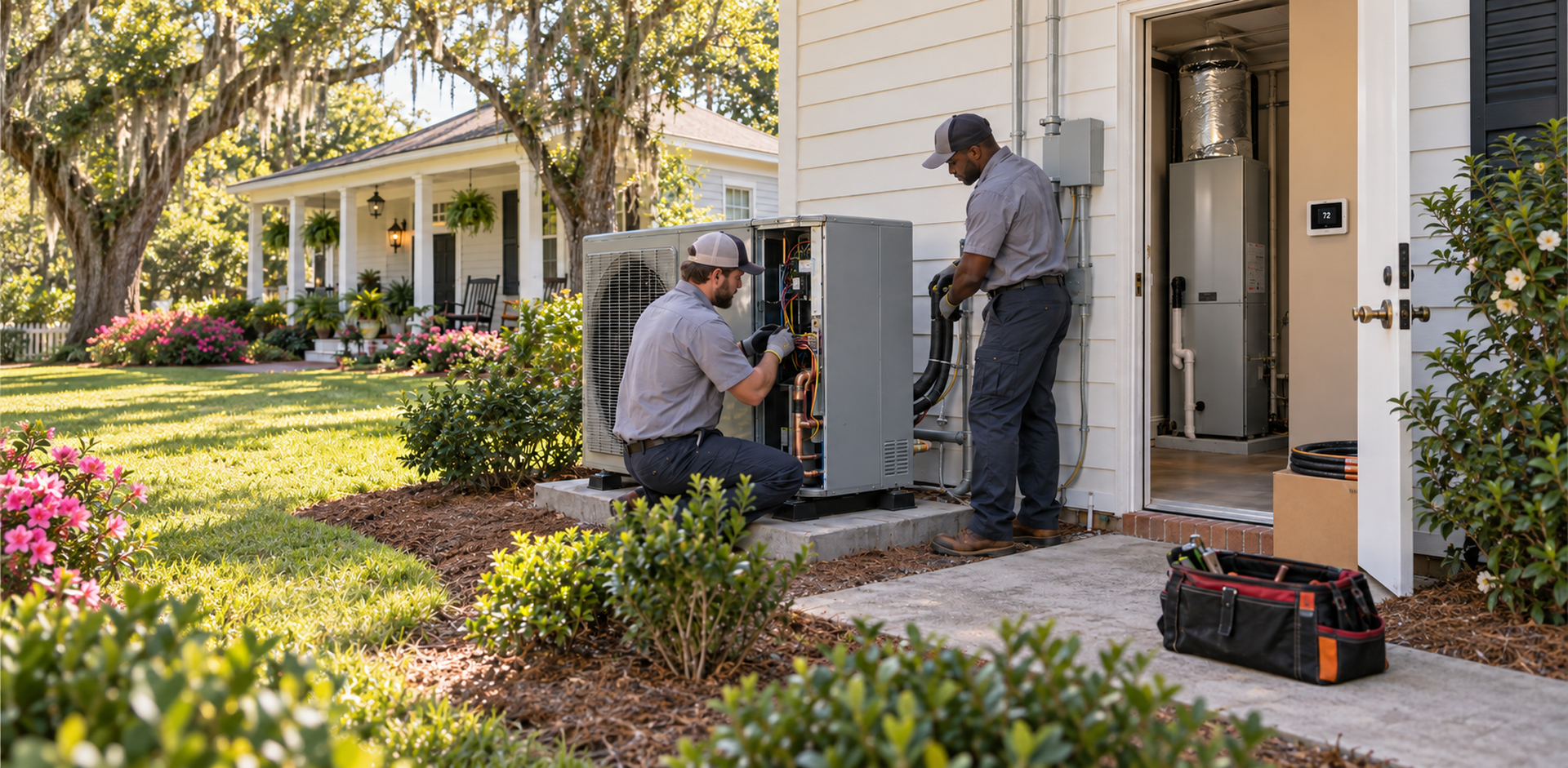
Experienced HVAC technicians install the system according to manufacturer specifications and industry best practices.
Heat Pump System Testing & Optimization
After installation, technicians test system performance, airflow, and temperature output to ensure optimal operation.
Homeowner Education
Homeowners receive guidance on operating the system, adjusting thermostat settings, and maintaining HVAC performance.
6 Signs Homeowners Should Upgrade Their Heating System
Heating systems typically last between 12 and 20 years depending on maintenance and usage. As systems age, efficiency declines and repairs become more frequent.
Common warning signs that indicate a heating system upgrade may be needed include:
• Rising energy bills without increased usage
• Uneven heating throughout the home
• Frequent furnace or heat pump repairs
• Loud or unusual HVAC noises
• Aging equipment nearing the end of its lifespan
• Difficulty maintaining comfortable temperatures
Upgrading to a modern heat pump or hybrid heating system can significantly improve comfort, efficiency, and reliability.
Why Homeowners Choose Comfort Engineered Systems Inc.
Selecting the right HVAC contractor is just as important as choosing the right equipment. Comfort Engineered Systems Inc. focuses on providing professional heating solutions designed for long-term performance and reliability. Your Com4t is our Guarantee!
Homeowners choose Comfort Engineered Systems Inc. for several reasons.
- Experienced HVAC professionals who understand modern heating technology
- Carefully designed HVAC systems tailored to each home
- Energy-efficient equipment options that reduce long-term operating costs
- Reliable installation practices that support long system lifespan
- Honest system recommendations based on homeowner needs
By combining technical expertise with thoughtful system design, Comfort Engineered Systems Inc. helps homeowners upgrade their heating systems with confidence.
Heat Pump Installation Service Area
Comfort Engineered Systems Inc. provides professional HVAC services throughout the surrounding Gulf South region, serving homeowners in the primary service area as well as nearby communities and surrounding neighborhoods.
Our HVAC team installs heat pump systems, natural gas heating systems, and hybrid HVAC systems for homes across the local service region, ensuring residents have access to reliable heating solutions designed for the area’s climate conditions.
Upgrade to an Energy-Efficient Heating System with Comfort Engineered Systems Inc.
Modern HVAC technology offers homeowners the opportunity to upgrade to more efficient, reliable, and comfortable heating systems. Whether installing a high-efficiency heat pump, upgrading to a natural gas furnace, or choosing a hybrid heating system, the right HVAC equipment can significantly improve home comfort while reducing energy costs.
Comfort Engineered Systems Inc. provides professional heat pump installation, heat pump replacement, hybrid heating systems, and gas furnace installation designed to deliver dependable performance for years to come.
Homeowners interested in upgrading their heating system can schedule a consultation to explore the most effective heating solution for their home. At Com4t, your Com4t is our guarantee!
Frequently Asked Questions for Heat Pump Installation & Natural Gas Heating Systems
How Much Does Heat Pump Installation Cost?
Heat pump installation typically ranges depending on system size, efficiency rating, and installation complexity. Factors such as ductwork modifications, electrical upgrades, and equipment type can affect final costs. High-efficiency systems may have higher upfront costs but often provide lower long-term energy bills.
Are Heat Pumps Efficient in Colder Climates?
Yes, modern heat pumps are significantly more efficient than older models and can operate effectively in many colder climates. Advanced cold-climate heat pumps use improved compressor technology and refrigerants that allow them to extract heat from outdoor air even in low temperatures. In very cold conditions, hybrid systems with a gas furnace can provide additional heating support.
What Is a Hybrid Heating System?
A hybrid heating system combines a heat pump with a natural gas furnace. The heat pump provides efficient heating during mild temperatures, while the furnace activates when outdoor temperatures drop significantly. This setup allows the system to use the most efficient heating method for current conditions.
Can a Heat Pump Replace a Gas Furnace?
In many cases, a heat pump can replace a gas furnace, particularly in climates where winter temperatures are moderate. However, some homeowners choose hybrid systems that combine both technologies to maximize efficiency and heating capacity. An HVAC professional can evaluate the home to determine the best option.
How Long Do Heat Pumps Last?
Most heat pumps last between 12 and 15 years with proper maintenance. Regular HVAC servicing, filter changes, and system inspections can help extend equipment lifespan while maintaining efficiency."
Do Heat Pumps Provide Air Conditioning?
Yes. Heat pumps function as both heating and cooling systems. During warmer months, the system reverses operation and removes heat from the home, providing air conditioning similar to a traditional AC system.
What Size Heat Pump Do I Need?
The correct heat pump size depends on several factors, including home square footage, insulation levels, ceiling height, window placement, and climate conditions. HVAC professionals perform load calculations to determine the appropriate system capacity.
Are Heat Pumps Energy Efficient?
Heat pumps are among the most energy-efficient heating systems available. Because they transfer heat instead of generating it through combustion, they can provide multiple units of heating energy for every unit of electricity used.
How Long Does Heat Pump Installation Take?
Most heat pump installations can be completed within one to two days, depending on system complexity and whether ductwork or electrical upgrades are required.
Are Rebates or Incentives Available for Heat Pump Installation?
Many energy-efficient HVAC systems qualify for rebates, tax incentives, or utility company programs designed to encourage energy efficiency. Availability varies by location and system type.
How Do Hybrid Heating Systems Work?
Hybrid systems automatically switch between heat pump heating and gas furnace heating depending on outdoor temperature conditions. This allows the system to maintain optimal efficiency while providing reliable heating during colder weather.
What Maintenance Do Heat Pumps Require?
Heat pumps should be serviced at least once per year by an HVAC professional. Regular HVAC maintenance typically includes cleaning coils, checking refrigerant levels, inspecting electrical components, and verifying system performance. Proper heat pump maintenance helps maintain efficiency and extend equipment lifespan.